
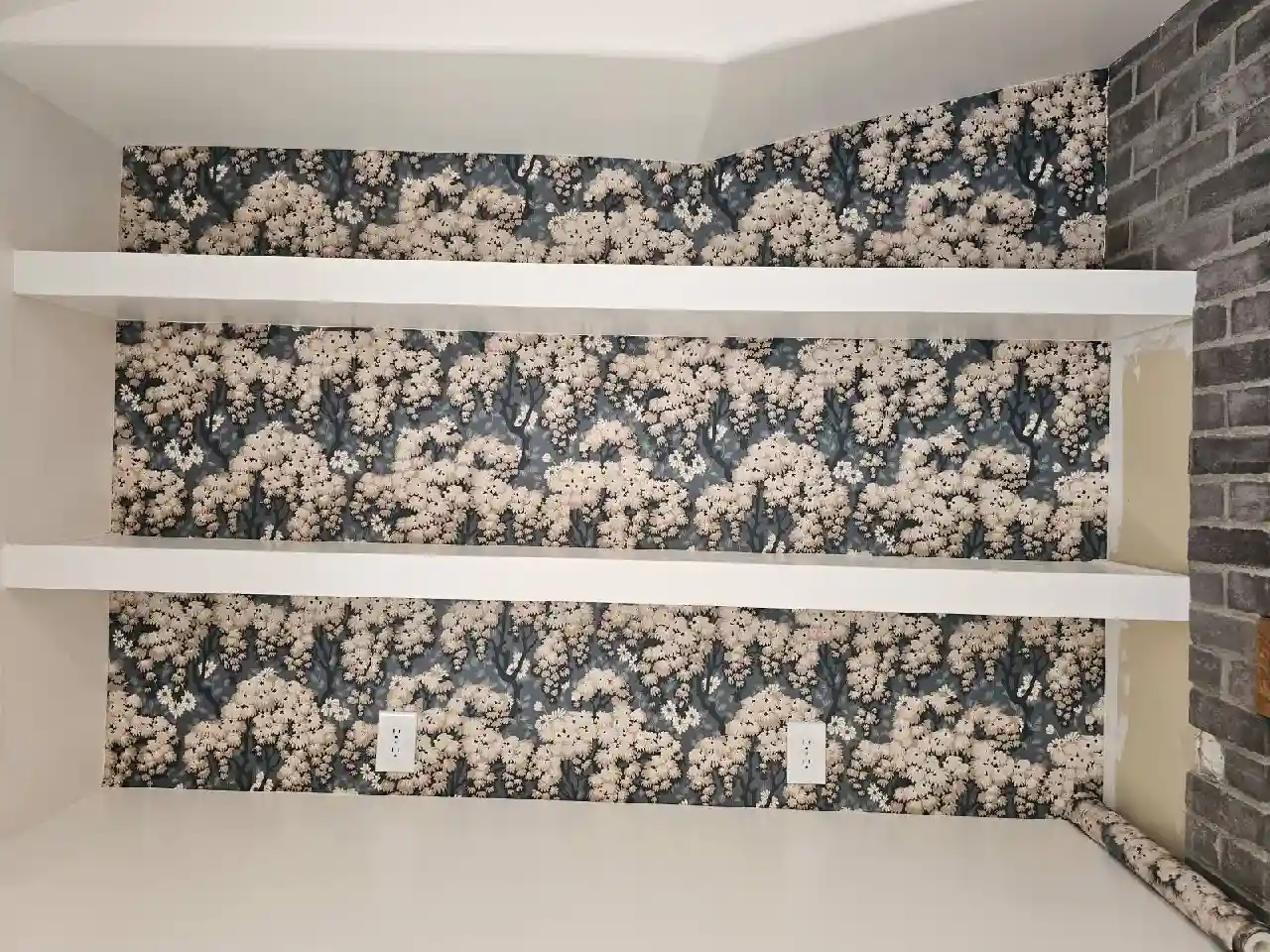
Start with the material,
not just the pattern.
The same visual idea may come in very different products. Read the manufacturer’s instructions before assuming how a wallpaper is installed or where it is suitable.
Traditional and pre-pasted wallpaper
Some products call for paste on the wall, others on the paper; pre-pasted materials have their own activation instructions. Adhesive compatibility and any required booking or resting time depend on the specific product. The installation method is not interchangeable simply because two rolls look similar.
Peel-and-stick wallpaper
Self-adhesive panels remove the separate paste step, but they still need an approved surface. Heavy texture, dusty walls, certain paint finishes or paint that has not cured can cause difficulties. A removable label is not a guarantee of clean removal from every wall.
Textured and specialty materials
Natural fibers and textured coverings may have variations between panels. Those characteristics can be part of the design rather than a defect. Confirm the product’s appearance, installation guidance and suitability before choosing it for a room.
Discuss a specialty wallcovering ↗A suitable wall is part
of the finished design.
A wall should be clean, dry, sound and compatible with the selected wallcovering. Loose paint, residual adhesive and uneven areas can affect either adhesion or appearance. A smooth-looking surface may still need preparation.
Fresh paint has to meet the wallpaper manufacturer’s curing guidance; there is no single waiting period that fits every product. A compatible wallcovering primer may be relevant for a traditional installation, while self-adhesive materials can have different surface rules.
Existing wallpaper removal can expose repairs that were not visible before. Moisture, leaks or an unstable surface need attention before a new covering goes up. Wallpaper should not be used to conceal an unresolved wall problem.
Read about wall preparation ↗The repeat changes
the plan.
A pattern repeat describes how the design recurs along the roll. Matching strips can require additional material beyond the wall’s measured area, particularly for larger motifs or offset matches. A mural may use a specific numbered panel sequence instead of a repeating pattern.
Deciding where to start affects where a strong motif lands and how the design meets doors, corners and the ceiling. Walls and corners are not always perfectly straight; the installation layout has to consider the room rather than follow every edge blindly.
Seam visibility also varies by product. Natural paneling effects and color variation should be understood before ordering—not mistaken for a promise that every wallcovering will look like one continuous printed sheet.
What shapes
an installation estimate?
The area to cover, number of rooms, ceiling height, access and room features all affect the scope. Removal and preparation can add work before installation begins. Product width, panel sequence and pattern repeat can influence layout and material requirements.
For a more detailed conversation, information such as approximate wall dimensions, the product label and the existing finish can be helpful. None of it is a condition for an initial call. If you do not know where to start, simply describe the room and ask what the next step could be.
There is no reliable one-price-fits-all answer for every wall and material. Confirm the project scope, price and scheduling directly with us.
Start an estimate conversation ↗A few practical answers.
Will all wallpaper seams be invisible?
Not every material produces the same appearance. Patterned papers need careful matching, while some natural or textured wallcoverings deliberately show panel transitions. Product characteristics and the wall’s condition matter; ask about the expected look of your chosen material.
How much wallpaper should I order?
The wall dimensions are only part of the calculation. Roll coverage, pattern repeat, matching method and trimming waste can change the amount needed. Confirm the quantity for the actual product and layout before ordering, and keep batch information together when ordering multiple rolls.
How long does an installation take?
The scope, wall preparation, product, pattern matching and access all affect the work. A single prepared accent wall is a different undertaking from removal and installation across several rooms. Discuss the project before relying on a time estimate or booking other work around it.
Can wallpaper go in a bathroom?
It depends on the product, wall, ventilation and exposure to moisture. Check the manufacturer’s intended use, and do not assume that every wallpaper belongs near splash zones or damp surfaces. Any underlying moisture problem needs attention before installation.